
Towing Service in Malta: What to Expect in 15–30 Minutes
When your car stops in the middle of the day (or night), the first question is rarely “Who has the cheapest tow?” It’s “How fast can someone get here, and what happens next?” If you are calling a towing service in Malta, a realistic, professional target is an arrival in about 15 to 30 minutes in many locations, and a clear process from dispatch to safe recovery.
This guide explains what that 15 to 30 minute window usually looks like, what information to share on the phone, how to stay safe while waiting, and what a reputable operator will do once on scene.
The first 2 minutes: what the operator will ask you (and why)
When you call, the dispatcher is trying to do two things quickly: identify your exact location and send the right recovery unit for your vehicle and situation.
Expect questions like:
Your location: nearest landmark, road name, direction of travel, and any nearby junctions. If you can share a live location pin, even better.
Vehicle details: make, model, approximate size, and whether it’s automatic, manual, or an EV.
What happened: breakdown, puncture, battery issue, accident, stuck vehicle, or lockout.
Safety and access: are you on a main road, in a tunnel, on a roundabout approach, in an underground car park, or blocked by barriers?
Passengers: whether anyone is injured or vulnerable (children, elderly), so the operator can advise you properly.
If there has been a collision or anyone is injured, call 112 first. A towing operator can help with recovery, but emergencies come first.
Dispatch: how a 15 to 30 minute arrival is typically achieved
A fast towing service relies on a simple operational model: send the nearest available unit with the correct equipment, instead of routing every job through a central depot.
Once you call a 24/7 provider with island-wide coverage, you can usually expect:
Immediate dispatch (not “we will call you back later”)
An ETA based on your exact area and current road conditions
A quick confirmation of your destination preference (home, mechanic, tyre shop, body shop, safe parking)
Traffic, roadworks, weather, and ferry logistics (if you are in Gozo or need to move between islands) can affect timing, but a professional operator will set expectations clearly.
What you should do while waiting (safety first)
Your priority is to reduce risk to you, your passengers, and other road users. Even a minor breakdown can become dangerous if the vehicle is in a live lane.
If it’s safe to do so:
Switch on hazard lights immediately.
Move the vehicle to a safer position (hard shoulder, lay-by, side street) if it still rolls and steering works.
Keep occupants away from traffic, ideally behind a barrier where available.
If you have one and conditions allow, place a warning triangle at a safe distance behind the vehicle.
At night, use interior lights cautiously and consider reflective clothing if you have it.
If you are in a high-risk location (busy arterial road, tight bend, tunnel approach), do not attempt repairs in the carriageway. Focus on visibility and personal safety.
A realistic 15 to 30 minute timeline (minute by minute)
Every callout is different, but this is what a well-run response often looks like.
Time window | What usually happens | What you can do |
0 to 2 minutes | Call handled, location confirmed, unit selected | Share a location pin, describe hazards (traffic, narrow streets, underground parking) |
2 to 10 minutes | Tow truck is dispatched and starts routing to you | Stay safe, keep phone available, gather key documents if accessible |
10 to 25 minutes | Driver is en route, may call to confirm exact pickup point | Send photos if requested (vehicle position, wheel damage, access constraints) |
15 to 30 minutes | Arrival on scene in many areas, safety assessment begins | Follow the operator’s instructions, keep bystanders away |
After arrival | Loading or roadside assistance begins | Confirm destination and price basics before moving the vehicle |
Arrival on scene: what a professional operator does first
When the tow truck arrives, a good operator will not start pulling immediately. They should first make the scene safer and prevent secondary damage.
Common first steps include:
Positioning the truck to protect the disabled vehicle where possible
Assessing whether roadside assistance (jumpstart, tyre change, fuel delivery) can solve the problem without towing
Checking for hazards such as leaking fluids, wheel damage, or unstable ground
Confirming the best loading method for your vehicle type and situation
If you called for a simple roadside fix (flat tyre assistance or a battery jumpstart), you may be back on the road quickly without needing a full tow.
Loading and towing: what you should expect (and what to confirm)
The loading method depends on the problem
The correct approach varies:
Breakdowns with no wheel damage: usually straightforward winching and secure tie-downs.
Accidents or wheel/suspension damage: extra care is needed to avoid dragging and further damage.
Low clearance vehicles: the operator may use ramps or other techniques to prevent bumper scraping.
If you drive an EV, towing can require special handling. For EV-specific guidance, see: EV Towing in Malta.
What you should clarify before the vehicle moves
A reputable towing service in Malta should be transparent about the basics. Before loading (or before setting off), confirm:
Where the car is going (exact workshop name and address, or your preferred location)
Any access constraints at the destination (narrow entrance, underground garage height limits)
How pricing is calculated (for example, distance, time of day, complexity, special equipment)
Payment method and whether you will receive a receipt
Avoid operators who refuse to give any pricing clarity at all. Exact totals can depend on what the driver finds on scene, but the logic should be explained.
Roadside assistance vs towing: which one you actually need?
Many “tow” calls are solved roadside in minutes. When you contact a service that offers both towing and roadside assistance, you get the fastest path back to normal.
Here is a quick way to think about it:
Battery flat: likely a jumpstart (and advice to test or replace the battery)
Flat tyre: tyre change if you have a usable spare, otherwise tow to a tyre shop
Out of fuel: fuel delivery may be enough
Lockout: vehicle lockout service, no tow needed
Engine overheating, warning lights, strange noises: safer to tow to a garage rather than risk further damage
After an accident: recovery is usually the right call, even if the car still moves
If you want prevention tips to reduce the odds of repeat callouts, this guide pairs well with: Essential tips to prevent breakdowns.
Accidents in Malta: what changes in the first 30 minutes
After a collision, towing is only one part of a safe response.
In many cases, you should expect the recovery operator to:
Help you move the vehicle to a safer position if appropriate and safe
Coordinate recovery when the vehicle is not drivable
Recover the vehicle without causing additional damage
For official road transport guidance and services, you can also refer to Transport Malta. (For emergencies, always use 112.)
Gozo callouts: what to expect
If you break down in Gozo, the process is similar, but timing can be influenced by ferry schedules and where the nearest unit is at that moment.
To speed things up, tell the dispatcher:
Your exact Gozo location and the nearest village or landmark
Whether you need towing within Gozo or transport toward Malta
Any constraints (tight alley, steep road, vehicle stuck on rough ground)
A professional provider with Malta and Gozo coverage should still communicate a realistic ETA and keep you updated.

What “professional service” looks like (quick quality checklist)
Not all towing experiences are equal. In the first few minutes on scene, you can usually tell if the job is being handled correctly.
Look for:
Clear communication about the plan (tow vs roadside fix)
Proper securing and tie-down procedures, not rushed shortcuts
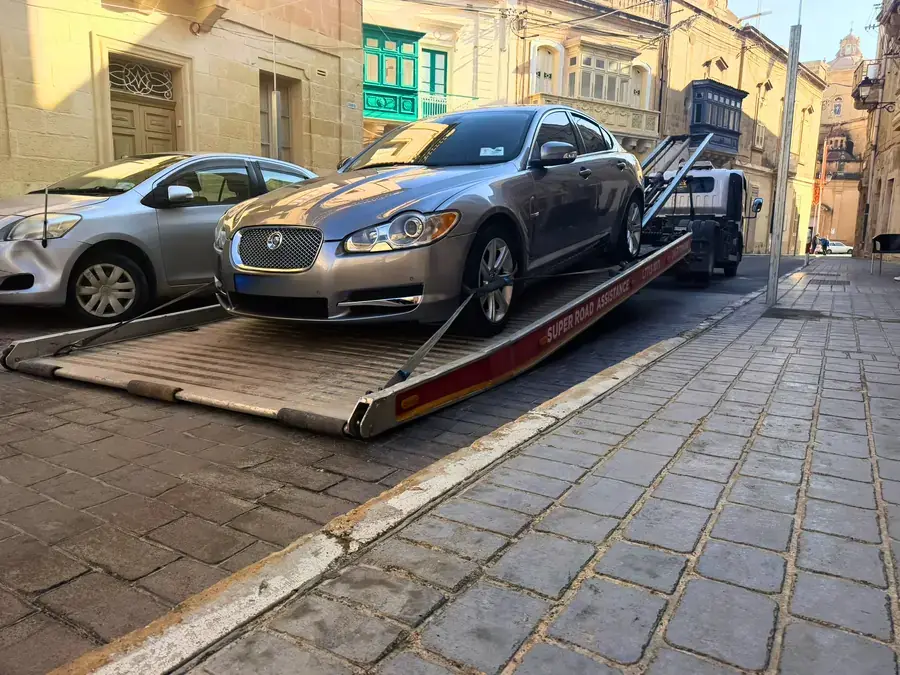
Respect for your vehicle (careful loading, sensible approach angles)
Transparent explanation of pricing drivers (distance, complexity, time)
A calm, safety-first attitude in traffic
If something feels unsafe (for example, towing from an incorrect point, or working in a live lane unnecessarily), ask questions. A good operator will explain what they are doing and why.
Frequently Asked Questions
How fast can a towing service in Malta arrive? Many callouts can be reached in about 15 to 30 minutes, depending on your location, traffic, and whether the nearest unit is available.
What information should I have ready when I call a tow truck? Your exact location (ideally a live location pin), your vehicle make and model, what happened (breakdown, accident, flat tyre), and any hazards or access issues.
Can roadside assistance fix the problem without towing? Often yes. Battery jumpstarts, flat tyre assistance (with a spare), fuel delivery, and lockout service can resolve many cases on the spot.
Will I know the price before the tow starts? A reputable operator should explain how pricing is calculated and give you a clear estimate once the situation is understood. Final cost may depend on distance and recovery complexity.
Do I need a membership to get help? Not necessarily. Some providers, including Super Road Assistance, offer emergency towing and roadside assistance without requiring membership.
Need a towing service in Malta right now?
Super Road Assistance provides 24/7 towing and roadside assistance across Malta and Gozo, with an average arrival target of 15 to 30 minutes, transparent pricing, and immediate dispatch of the nearest unit.
Call +356 7713 1071 or visit Super Road Assistance to get help quickly.


Comments